
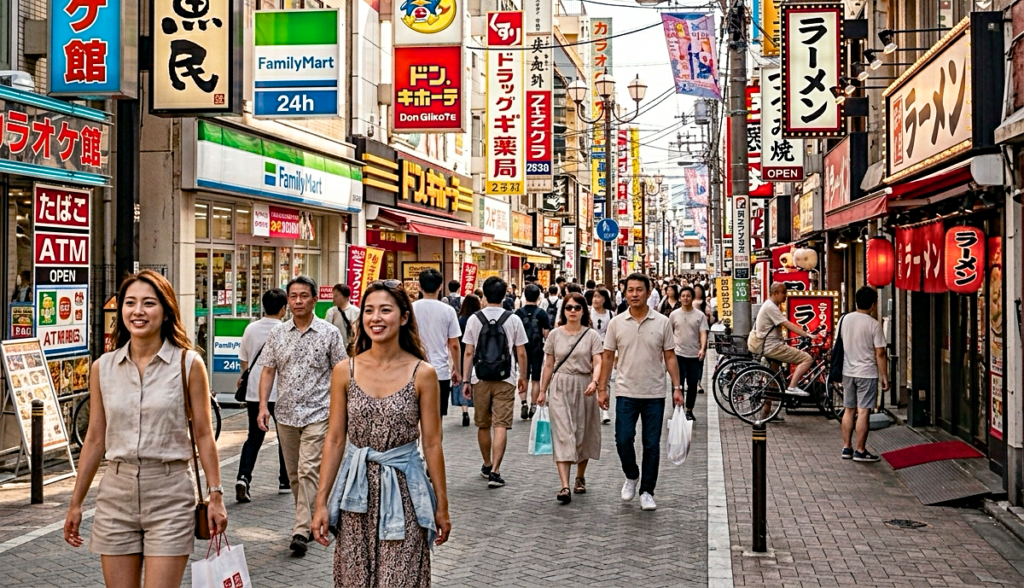
Japan’s obesity rate is roughly 4 percent. America’s is pushing 40.
Same planet. Same era. A tenfold difference in one of the most consequential health metrics we track. If you’ve ever wondered how that happened — and more importantly, what you can do about it — the answer is less mysterious than the wellness industry wants you to believe.
It doesn’t require a supplement. It doesn’t require a special breathing practice. And it has nothing to do with Tai Chi.
It starts with understanding how Americans got here.
The Policy Decision That Quietly Rewired the American Diet
In the early 1980s, domestic sugar producers — a politically powerful lobby anchored in Florida’s sugarcane industry — pressured the Reagan administration to slash import quotas on Caribbean sugar and impose steep tariffs. The result: the U.S. price for sugar locked in at roughly two to three times the world market rate.
That single policy decision set off a chain reaction that still shapes what Americans eat today.
Corn farmers, already heavily subsidized, had a sudden and massive new opportunity. High fructose corn syrup — a sweetener derived from corn that had been commercially viable since the late 1960s but couldn’t compete with normally priced sugar — was now significantly cheaper than the artificially inflated domestic sugar price. Food manufacturers noticed immediately.
By 1984, Coca-Cola and Pepsi had both switched their U.S. formulas to HFCS. The processed food industry followed. Bread, condiments, yogurt, cereal, sauces, snack foods — if it came in a package, it almost certainly got sweeter. And cheaper. And more abundant.
“Food got cheaper, sweeter, and more abundant. Nobody felt full. And nobody connected the dots.”
Here’s why that matters physiologically: fructose is metabolized almost entirely in the liver, unlike glucose, which is processed throughout the body and triggers insulin and leptin responses that tell your brain you’ve eaten enough. Fructose largely bypasses those satiety signals. You can consume a significant quantity of fructose-sweetened food and your brain’s “you’re full” mechanism barely registers it. At high doses, fructose metabolism also produces triglycerides and uric acid as byproducts — associated with fatty liver disease, gout, and cardiovascular risk.
More sugar went into the food. The food was cheaper. It didn’t fill people up. People ate more. The feedback loop was quiet, systemic, and almost invisible.
The Study That Made It Worse
In the 1960s, the sugar industry perceived a looming problem. Research was beginning to suggest that excessive sugar consumption might be contributing to rising rates of obesity and heart disease. Their response was not to reformulate. It was to fund a solution.
The Sugar Research Foundation paid a Harvard nutritionist named Mark Hegsted to publish research asserting that it was animal fat — not sugar — that was making Americans gain weight. The study was influential. Hegsted later became a senior official at the USDA and helped shape the nation’s first Dietary Guidelines.
This wasn’t uncovered until 2016, when internal Sugar Research Foundation documents were published in JAMA Internal Medicine. By then, the damage had been baked into four decades of public health guidance.
The low-fat boom of the 1980s and 1990s was the direct consequence. Americans cut back on meat — a high-protein food that genuinely does promote satiety — and replaced those calories with carbohydrates, often in the form of “low-fat” processed foods that substituted sugar for fat to maintain palatability. They were following official advice, underwritten by the industry that benefited most from it.
What Japan Did Differently
Japan didn’t escape all of this through superior willpower or genetic luck. They escaped it largely through infrastructure and culture.
Japanese cities are built around trains, not cars. Dense neighborhoods mean that daily errands — commuting, shopping, meeting a friend — happen on foot. Stairs are used instead of elevators. The average urban Japanese resident walks significantly more each day than the average American, not because they’re especially virtuous, but because their environment makes walking the default.
Japanese food culture, while certainly not perfect, also retained more whole foods and smaller portion norms through the period when American processed food culture was expanding most aggressively.
The result is a population that moves more and eats less sugar — not through discipline, but through design.
“The secret was never exotic. The environment just made the healthy choice the easy choice.”
What You Can Actually Do
You cannot rebuild American cities. You cannot repeal agricultural subsidies or undo forty years of corrupted dietary guidelines in an afternoon. The systemic problem is real and it is large.
But here is what’s also true: walking is one of the most well-documented health interventions available to any human being, at any fitness level, with no equipment and no cost. The research on this is extensive and consistent. Regular walking reduces cardiovascular risk, supports healthy weight management, improves mood, sharpens cognition, and extends healthy lifespan. We’ve covered the physiological case in depth elsewhere on this blog.
The Japanese didn’t get a special secret. They got an environment that made walking unavoidable. The question for Americans isn’t whether walking works — it’s whether we can make it something we actually want to do.
That’s the problem Games Afoot was built to solve.
Making Walking the Thing You Choose
Games Afoot builds narrative walking apps — immersive mystery and discovery experiences that unfold as you move through the real world. Our brand promise is simple: we make walking fun.
goAgatha, our first title, puts you inside an unfolding mystery. Every step advances the story. You’re not logging miles for the sake of logging miles — you’re chasing something. The walk is the medium. The story is the reward.
You can’t out-supplement a broken food system. But you can take back control of the one variable that’s always been in your hands: how much you move.
Japan figured that out by accident, through city planning. You can figure it out on purpose.
One step at a time.